


 28-09-2026
 Share
Share
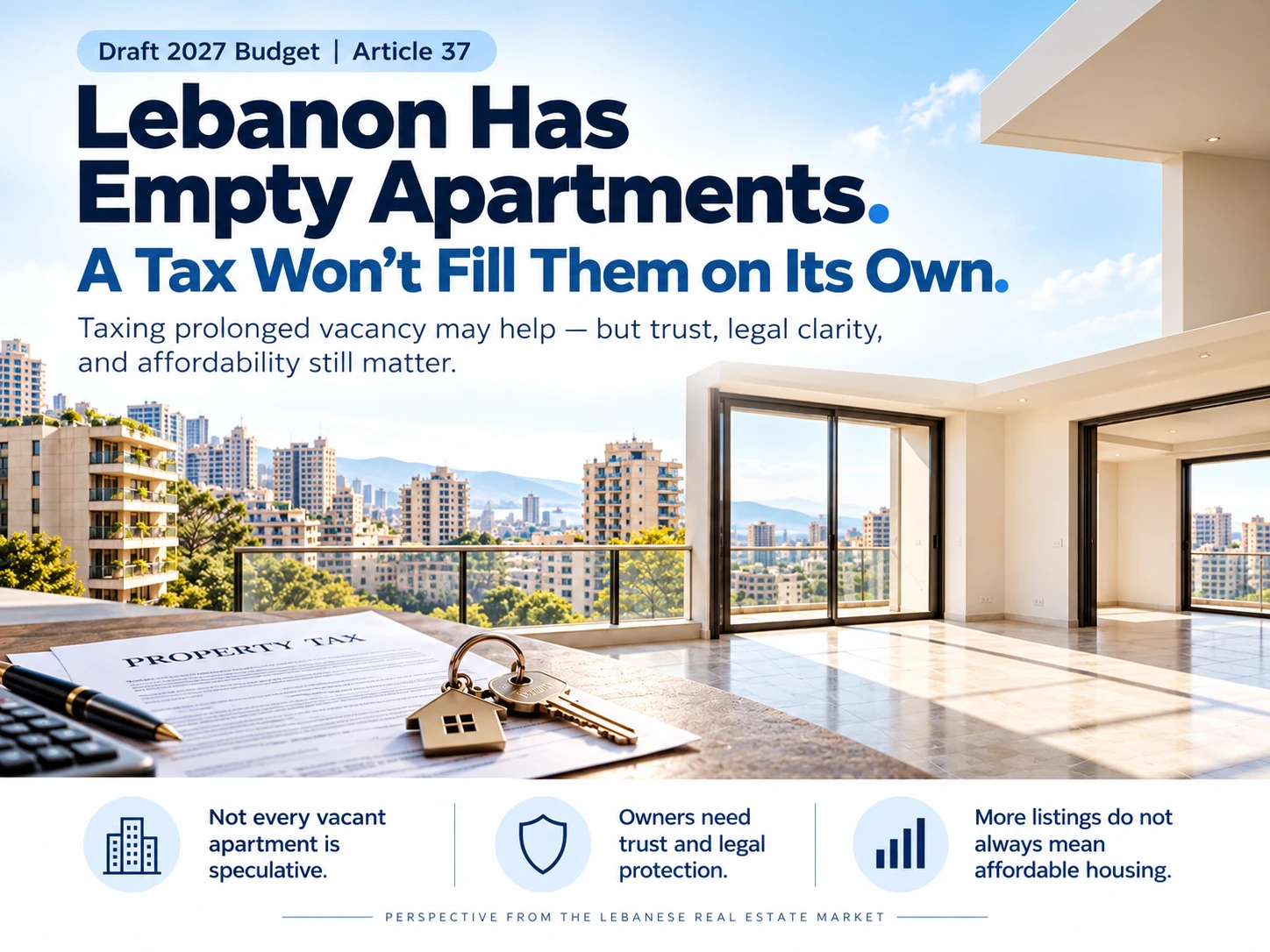
Lebanon Has Empty Apartments. A Tax Won't Fill Them on Its Own.
Lebanon faces a familiar paradox: vacant apartments on one side, families struggling to find affordable housing on the other.
Article 37 of the draft 2027 budget tries to address it. Vacant residential units would retain their built property tax exemption for one year after construction (three years for qualifying developers). After that, they would become taxable on the basis of 50% of their estimated rental income, even if they remain unoccupied.
The intended logic is straightforward: make prolonged vacancy more costly.
But taxing vacant properties is not a new debate in Lebanon. Similar proposals have surfaced before without producing lasting change. The question now is whether this one will survive the legislative process, and how it would be enforced. How will vacancy declarations be verified? Who determines the estimated rental value?
From my experience in the Lebanese real estate market, three realities deserve attention.
1. Not every empty apartment is a speculative investment.
Some belong to Lebanese living abroad who keep their property for summers, family visits, or simply to stay connected to their country. For them, this would feel less like a tax on speculation than a tax on belonging.
2. Vacancy is often a question of trust.
Owners who remember decades of frozen rents are reluctant to rent out their properties. A financial penalty alone will not resolve that hesitation. Confidence in tenancy agreements, legal protection, and enforceable contracts matters just as much.
3. More listings do not automatically mean affordable housing.
A vacant apartment in Achrafieh, priced for international or diaspora buyers, does not answer the needs of a young family looking to settle in Dekwaneh.
In my view, without a clear and enforceable legal framework that gives owners the confidence to rent, this measure risks generating additional tax revenue without necessarily bringing more homes back onto the market.
Would this measure push you to rent or sell a vacant property, or would you simply pay the tax?